
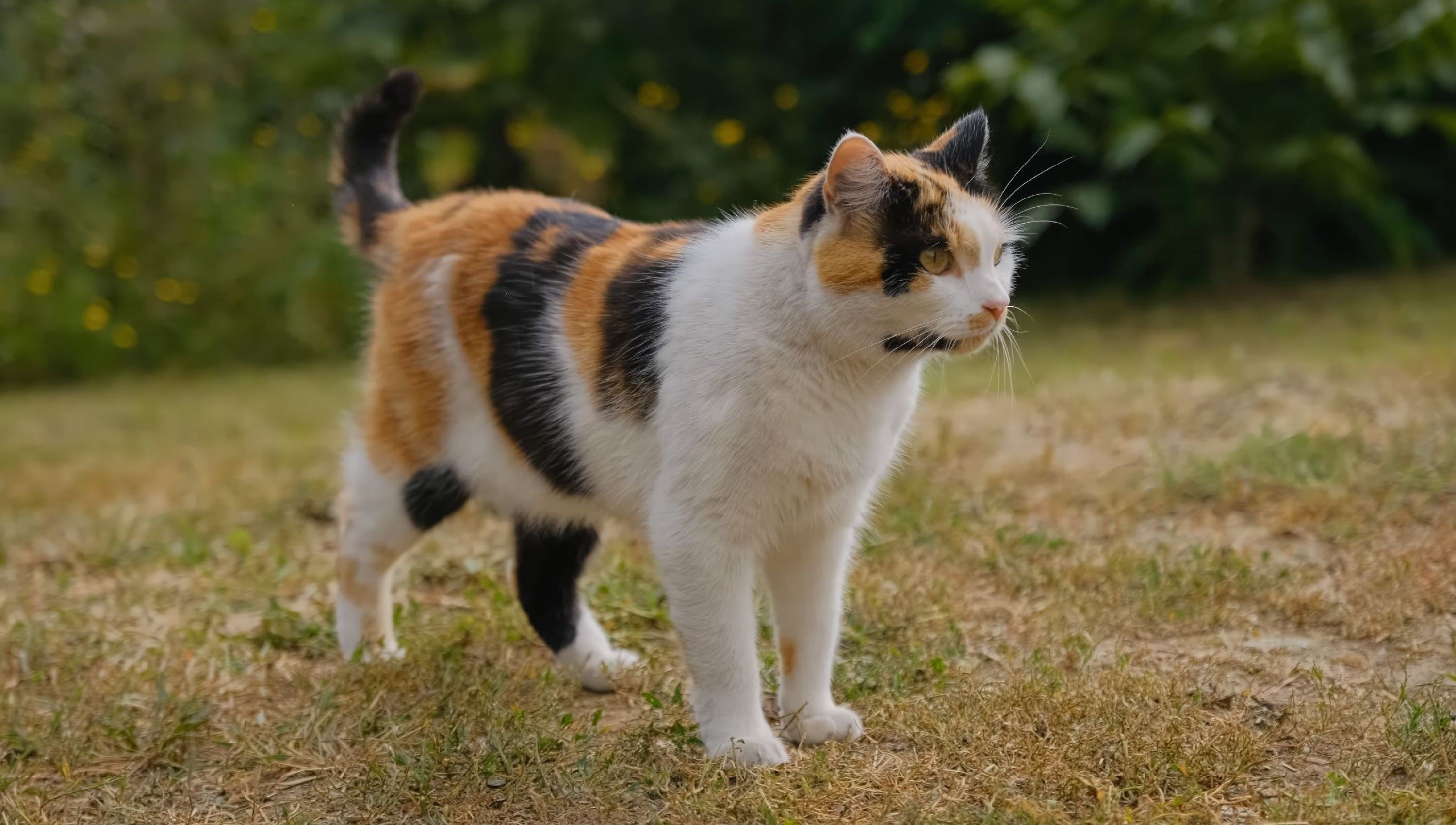
Understanding cat behavior: Why is feline communication so mysterious?
If you’ve ever looked at your dog and felt like they were reading your mind, you’re not alone. But if you’ve ever looked at your cat and felt like you were staring at a beautiful, furry enigma, you’re also in good company.
As pet parents, we often treat cats and dogs as two sides of the same coin. However, science tells us they are actually worlds apart—especially when it comes to how they communicate with us. At Blue Toby, we’ve previously explored how dogs essentially domesticated themselves to fit into human society. But when we look at cats, the story is very different. Even the most devoted cat lovers often struggle to understand what their feline friends are trying to say.

The evolution of cat communication
The primary reason dogs are so easy to read is that we spent 30,000 years fine tuning a mutually beneficial relationship. We selected dogs for traits that mirror our own social cues. They learned to follow our gaze, understand our pointing gestures, and mimic human-like expressions. Dogs were bred to be our coworkers—hunters, herders, and guardians—who had to understand us to survive.
In contrast, cats are "recently" domesticated—only about 10,000 years ago. Even then, they didn't work for us; they lived near us. Early cats provided pest control in exchange for tolerance. Humans didn't breed them for social tasks or obedience. Consequently, your house cat still shares about 95% of its DNA with her wild ancestors. In many ways, your house cat is still a small, solitary wildcat that just happens to live in your living room.
So, it’s no wonder that understanding cat behavior comes with more challenges. And the science backs this up.
Why we struggle to understand cat body language
We like to think we are experts on our pets. However, a 2025 study in Frontiers in Ethology suggests humans struggle to read feline moods.
The study found that people are particularly bad at identifying "negative valence." In simple terms, most people cannot tell when a cat is unhappy or wants to stop playing. Even with basic training on cat behavior, participants struggled to spot the subtle signs of feline stress. These signs include enlarged pupils and flattened ears, like the image below.
This "communication gap" often leads to accidental scratches. But in the cat’s mind, they’ve been screaming "Stop!" with their body language for five minutes. We just didn't have the evolutionary “software” to download the message.

Join the movement to understand cats
As an animal behavior scientist, I am a huge fan of improving our understanding of our pets. Reading the communication cues of dogs, cats, and other furry friends can increase our appreciation and greatly improve our relationship. And since dogs have held center stage for so long, isn’t it time that cats got equal billing?
For too long, feline behavior was ignored in favor of studying dogs. It’s great to see that the scientific community is finally prioritizing cat behavior research.
You can play a direct role in closing this knowledge gap through citizen science. Darwin’s Ark is a leader in this field. This organization allows pet owners to contribute to massive studies on feline personality and genetics. By enrolling your cat, you provide the data researchers need to decode the feline mind.
Scratching the surface on cat behavior
Don’t be discouraged if you find your cat mysterious. After all, that's part of the allure of our feline companions. By staying patient, learning about cat communication (see our primer on cat etiquette) and participating in projects like Darwin’s Ark, you help the world better understand the cats we love.

Written by Linda Brent, PhD