
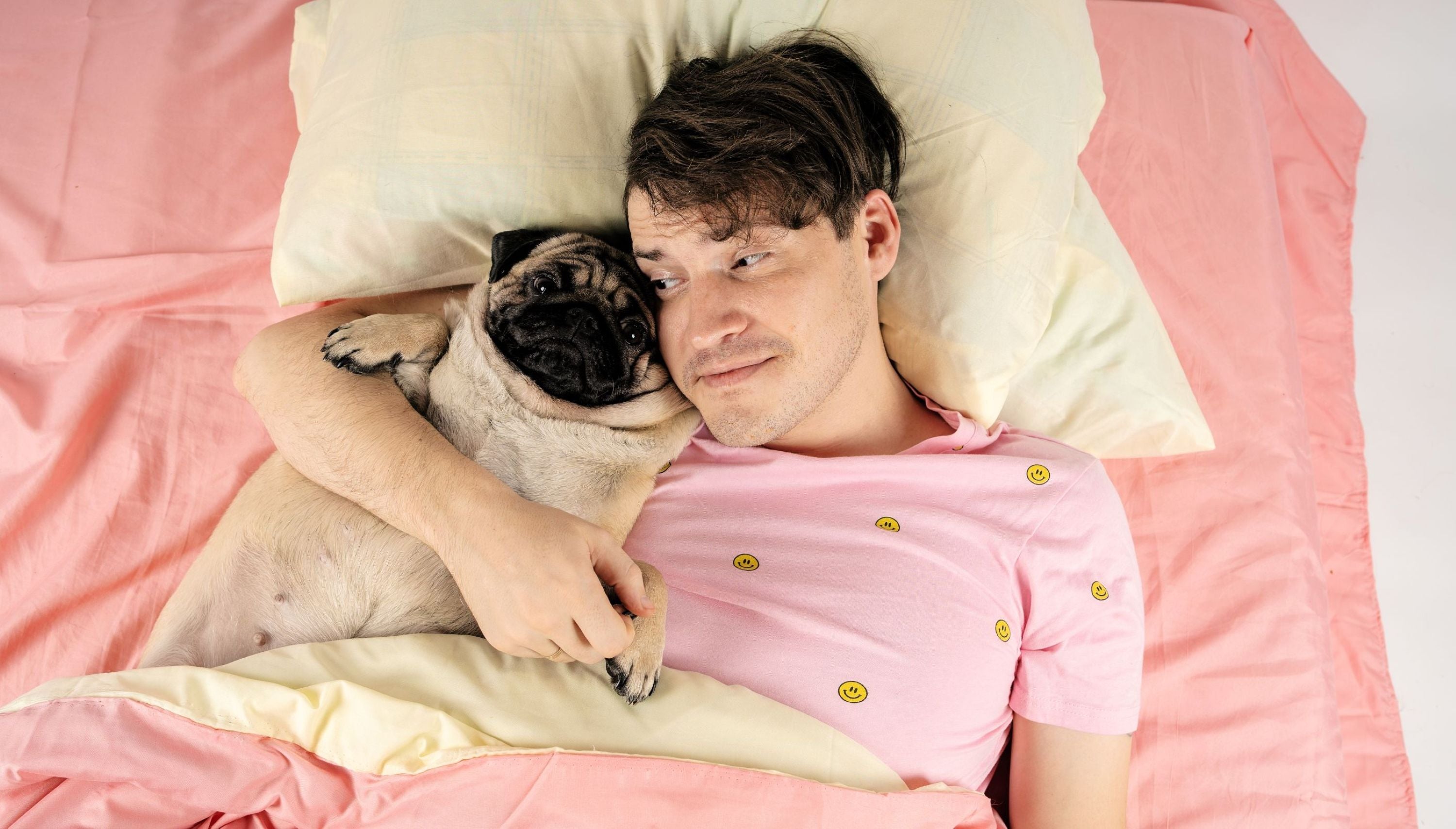
To cuddle or not to cuddle? The science of co-sleeping with your pets
Overview
While research shows that pet owners feel more comforted co-sleeping with their pets, clinical data reveals that co-sleeping reduces sleep quality due to mismatched circadian rhythms and allergens. To balance this emotional bond with physical health, particularly for light sleepers or allergy sufferers, experts recommend placing a high-quality pet bed on the floor next to your bed.
The co-sleeping conundrum
As the bond between humans and pets grows stronger—particularly in Western cultures—many of us have transitioned from seeing dogs and cats as "pets" to seeing them as family members or even our children.
As an animal behavior scientist and the founder of Blue Toby, I live at the intersection of this bond. I’ve spent my career studying nonhuman primates and domestic pets because I adore animals. One question regularly comes up with pets: Is sharing a bed with our pets actually good for us?
This question provokes strong emotions and opinions. As a scientist, I can help us go beyond hype and unfounded opinions. We must look into the peer-reviewed data.
The "Perception vs. Reality" gap in sleep quality
Pet parents often like their pet to sleep on their bed because it offers them comfort and a closer bond with their pet. And some pets love to have the privilege of sleeping on our beds! But how does it affect sleep quality?
One of the most fascinating findings in recent research is the disconnect between how we think we sleep and how we actually sleep when a pet is in our bed.
- The subjective "win": A 2025 survey on pet ownership and sleep patterns found that pet owners generally report sleeping better than those without animals. We feel more secure and comforted.
- The objective reality: Contrast that with a study showing that co-sleeping was associated with poorer perceived sleep quality and greater insomnia severity.
A 2021 meta-analysis reviewed the research and perfectly summarizes this paradox: while people report their sleep is "unchanged or better," clinical sleep measurements show that sleep quality is compromised when sharing a bed. We wake up more often and our sleep efficiency is dropping, even if we don't remember it the next morning.
Why does this occur? Co-sleeping may offer a psychological benefit that comfort from pets may provide, although this aspect requires more research. Sleeping with a pet is another way to bond and show affection. Our pets also provide comfort and a sense of security, which can be especially helpful to individuals suffering from anxiety or PTSD.
Why Do Pets Disrupt Our Sleep?
There are several reasons sleep quality can be poor when sleeping with a pet. It isn't just about them taking up the "middle of the bed." It’s also biological.
- Circadian mismatch: Humans are monophasic (we sleep in one long block). Dogs, however, typically have up to three sleep/wake bouts per night. Cats are even more disruptive, as they normally sleep most in the afternoon and are most active during the night and early morning hours.
- The "uninvited" bed guests: Beyond movement, there is the hygiene factor. A 2022 study found that fleas and specific bacteria common to dogs and cats were frequently present in the beds where they slept. Not a pleasant thought.
- Allergies: For many, the invisible cost of co-sleeping is a runny nose or nighttime coughing, as dander stays trapped in the bedding, triggering low-level allergic reactions that prevent deep sleep.
The pet’s perspective: Is co-sleeping good for them?
While we focus on our own rest, we must also ask: Does the co-sleeping arrangement benefit your pet?
The benefits for the pet
For dogs, who are naturally social "pack" sleepers, proximity to their human family can significantly reduce stress. A 2024 review in Animals outlined the importance of positive human interaction for dogs, including increased oxytocin – the social bonding hormone - and reduced cortisol. We don’t yet know if this also applies to co-sleeping.
The drawbacks for the pet
- Human-Induced Disruption: Just as pets wake us, we wake them. Hoffman et al. (2018) noted that human movement can fragment a dog’s sleep just as much as theirs fragments ours. A study on service dogs reported that they were even more sensitive to human wakefulness.
- Physical Strain: For senior pets or breeds prone to joint issues, the constant jumping on and off a high mattress can lead to or worsen orthopedic issues. Repetitive stress on joints from jumping is a leading cause of progression in canine osteoarthritis.
You may have also heard that letting your dog sleep on the bed will cause dominance issues. However, most behavioral experts agree that simply co-sleeping will not cause dominance issues. However, if your dog already exhibits dominance or guarding behaviors, sleeping together may exacerbate these behaviors. It is best to seek the counsel of a behavioral consultant.

Finding the balance: what’s the verdict on co-sleeping with a pet?
Like many of you, I have struggled with the issue of sleeping with a pet on the bed. When we adopted Blue at one year old, he wanted to sleep on the bed with us. At first, I thought it was cuddly and sweet. However, I am a light sleeper, and after a year of waking throughout the night, I had to give up on co-sleeping for my own health. Luckily, I had started Blue Toby and crafted a wonderful pet bed for Blue to sleep on instead.
The issue of sleeping with your pet is complex and there is no “one-size-fits-all” answer. The psychological comfort and security of a pet is undeniable, but the physiological cost to our sleep is real. The science indicates that there are negative sleep outcomes for people and their pets by sleeping together. But there are positive bonding experiences as well.
The middle ground? Provide your pet with a high-quality sleep surface of their own—like a Blue Toby bed—placed right next to yours. You get the proximity, comfort, and security without the 3:00 AM wake-up calls or the shared bacteria.
If you decide that co-sleeping with your pet is the way to go, you might consider adding a Nap Noodle for your dog or cat. Several Blue Toby clients use the body pillow for the dog or cat to cuddle against, which reduces the incidence of them pushing you out of the bed and can reduce nighttime waking.

Written by Linda Brent, PhD